
Experience the Future of the Web — Join the WEB4 Movement
Watch our introduction video, read about the SIG-56 standard, and become part of the Byteshares network today.
What is WEB4?
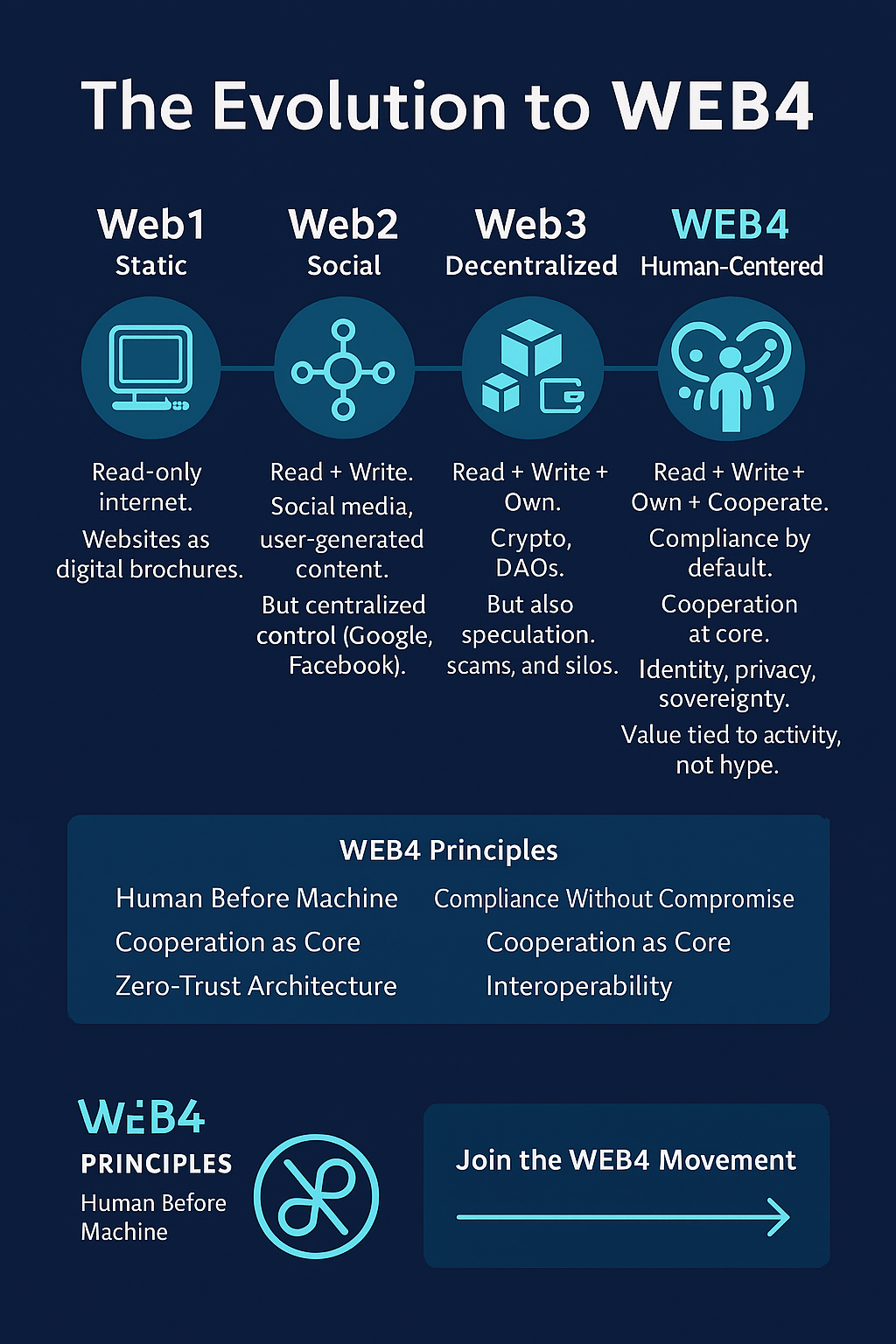
We have moved from Web1 (static) → Web2 (social) → Web3 (decentralized). Each step has opened new doors — but also left gaps.
Web3 promised freedom, but too often delivered speculation, complexity, and chaos. It created wealth, yes, but also silos, scams, and disillusion.
WEB4 is the next evolution.
- Humans are at the center. Identity, creativity, and sovereignty matter more than speculation.
- Compliance is by default. Innovation does not fight law — it aligns with it.
- Cooperation is built-in. Ownership is shared, governance is democratic.
- Activity, not hype, drives value. Tokens are tied to real work, profits, and ecosystems.
The Signature-566 (Sig-56) Standard
At the heart of WEB4 is a new creation framework: Sig-56.
Developed with Daniel Pineda, Sig-56 defines how decentralized applications (DApps) can be built without ICOs, without airdrops, and without speculation.
Instead, DApps in WEB4 are:
- Human-curated – designed and validated by communities, not bots or whales.
- Quality-driven – ranked by usefulness and trust, not hype or manipulation.
- Economically sustainable – monetization flows back to the ecosystem through a built-in 2% index fee structure.
- Native to Solana – chosen for speed, efficiency, and sustainability.
Sig-56 is not a whitepaper promise — it is a working standard, ready to guide a new era of apps and ecosystems.
Principles of WEB4
WEB4 is shaped by clear guiding principles:
- Human Before Machine: Identity, creativity, and culture take precedence. Technology serves humans, not the other way around.
- Compliance Without Compromise: From GDPR to financial regulation, compliance is built in.
- Cooperation as Core: Communities are treated as owners and partners.
- Zero-Trust Architecture: Systems run without central control, but with enforceable logic.
- Interoperability: WEB4 connects across chains, industries, and cultures.
Why WEB4 is Different
Compared to previous iterations, WEB4 offers a paradigm shift:
- Web2 – centralized control, surveillance capitalism.
- Web3 – decentralization, but chaotic and speculation-driven.
- WEB4 – cooperative, compliant, and human-centered.
This is not just the next buzzword in tech. It balances innovation with trust, regulation with freedom, and cooperation with individual empowerment.
The Ecosystem in Practice
Use Cases
WEB4 enables:
- Finance – tokenized assets, stablecoins, cooperative investments.
- Governance – citizen tokens, e-voting, community decision-making.
- Work – freelancing platforms with instant, fair payments.
- Identity – privacy-preserving digital passports.
- Culture – NFTs, creative ecosystems, and cooperative rights management.
- Sustainability – ecosystems aligned with measurable social and environmental impact.
Why It Matters
The digital world is at a crossroads. We can continue down the road of speculation, manipulation, and centralization — or we can build something new.
WEB4 matters because it offers:
- • Trust where Web3 offered doubt.
- • Cooperation where Web2 offered exploitation.
- • Compliance and fairness where earlier systems ignored the law.
It is not just about technology. It is about re-humanizing the digital future.
Join the WEB4 Movement
WEB4 is a standard, a movement, and a community.
Read the Sig-56 Standard Explore ByteShares Join the CommunityClosing Thought
WEB4 is more than an upgrade. It is a reset.
A new layer of the web where trust, cooperation, and creativity guide innovation.
As FAWN I ∞T, I see WEB4 as the philosophy of the InterTwined Being made digital: technology and humanity woven together, compliance and creativity aligned, cooperation and individuality balanced.